
The respective Dussehra rallies of Maharashtra Chief Minister Eknath Shinde and and Shiv Sena-Uddhav Balasaheb Thackeray chief Uddhav Thackeray were once again about whose version of Hindutva is genuine and who is the true inheritor of party patriarch Bala Thackeray's legacy.

Now that the economy is growing at a higher-than-expected rate, it is time to accelerate the pace of fiscal consolidation, and the Budget could be a good starting point, argues Rajesh Kumar.
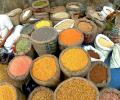
Prices of food items like cereals, pulses, and edible oils rose or remained steady in May, a Reserve Bank of India (RBI) report said, indicating there could be another higher inflation print. However, it observed that the Monetary Policy Committee's (MPC's) surprise move to increase interest rates bodes well for its credibility. The RBI's monthly State of the Economy report, released on Tuesday, citing high frequency food price data from the Ministry of Consumer Affairs for the period May 1-12, said the increase in the prices of cereals was primarily because of the surge in wheat prices.

In industrialised countries inflation is less than 2 per cent, while most of the developing countries experience nearly double-digit or more inflation

'Your decisions should not be driven by your view on the market, but by your objectives, risk appetite, and time horizon.'

India's industrial production grew by 1 per cent in December, official data showed on Friday. According to the Index of Industrial Production (IIP) data, the manufacturing sector output grew by 1.6 per cent in December 2020.

Long-term macro trends indicate growth in demand for air travel. Trends from the ticketing website MakeMyTrip indicate a likely annual growth of between 11-17 per cent in Indian air travel demand over FY24-30. Through that period, InterGlobe Aviation or IndiGo may continue to make gains in market share in both domestic and international travel, aided by large fleet additions. IndiGo is the largest global customer of Airbus by far with 950 aircraft orders outstanding.
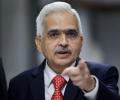
Reserve Bank Governor Shaktikanta Das on Wednesday said underlying economic activity in India continues to be strong, but external factors will cause some "dent" to the economy. Speaking at the BFSI Insight Summit 2022 organised by Business Standard, Das said the RBI tracks 70 fast moving indicators and most of them are in the "green box". It is the external sector, mired by a fear of recession or clear visibility about slowing growth in a large part of the world, where the challenges lie, he said, adding that the impact of external demand will "dent" the economy.

RBI awaits fiscal stance, inflation to cool off to decide on rates.

Senior citizens and others depending upon income from bank fixed deposit (FD) schemes will be at the receiving end with the retail inflation exceeding the interest rates. The Reserve Bank of India (RBI) in its latest monetary policy review has projected retail inflation at 5.3 per cent for the current financial year. Last week, the RBI said that the Consumer Price Index (CPI)-based inflation is now projected to be at 5.3 per cent for 2021-22 with risks evenly balanced.

Dabur India has been the worst performer in the fast-moving consumer goods (FMCG) space this year (CY23), posting a 1 per cent decline even as its peer index, the Nifty FMCG, has delivered returns of over 29 per cent in this period.

Another priority in the first 100 days could be the launch of an e-platform -- Trade Connect -- to help exporters connect with stakeholders of international trade.

The National Testing Agency, however, denied any irregularities and said the changes made in the NCERT textbooks and grace marks for losing time at the examination centres are some of the reasons behind the students scoring higher marks.

This is a terrible situation for a growing economy to be in, and the central bank would be expected to act to correct the situation.

RBI is expected to discuss about the impact of GST in its monetary policy.

'BJP and RSS may have differences over minor issues but their hearts long for one common aim -- that of A Hindu Rashtra.' 'And this time to prove this point the RSS has prepared to help BJP win this election with all its might.'

'The private sector believes that some enablers in labour-intensive sectors like apparel, toys, tourism, and media retail, can unlock a lot of jobs.'
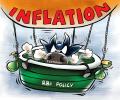
The RBI, which mainly factors in CPI for arriving at its bi-monthly monetary policy, has been mandated by the government to ensure that inflation remains at 4 per cent, with deviation of 2 per cent on either side.

rediffGURU Ramalingam Kalirajan answers your personal finance queries.
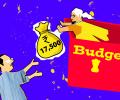
Rediff.com spoke to registered investment advisors to figure out how best the extra Rs 17,500 saved ever year can be invested to create a decent corpus in the years ahead. This is what they said.
The RBI has lowered interest rates by 1.25 per cent since January.

'We are very watchful about inflation and growth. But the main challenge is economic revival and growth.'

Deloitte India on Friday said it estimates India's GDP growth at 6.6 per cent in the current fiscal helped by consumption expenditure, exports rebound and capital flows. In its India's economic outlook report, Deloitte said the rapid growth of the middle-income class has led to rising purchasing power and even created demand for premium luxury products and services. With the expectation that the number of middle-to-high-income segments will be one in two households by 2030/31, up from one in four currently, we believe this trend will likely become further amplified, driving overall private consumer expenditure growth, it said.
The Reserve Bank is likely to maintain status quo on interest rates in its forthcoming monetary policy review but may change the stance in view of retail inflation piercing its upper tolerance limit, global uncertainties created by the ongoing Russia-Ukraine war, and the urgency to protect and boost growth, feel experts. The RBI governor-headed rate setting panel -- Monetary Policy Committee (MPC) -- will be holding its first meeting of the 2022-23 fiscal from April 6 to 8. The outcome will be announced on April 8.

RBI will be considering this set of data for formulating its next bi-monthly monetary policy on October 5.

Vegetable rates may ease from September, led by tomato prices, which have started showing signs of correction on the back of increased supply, Reserve Bank of India (RBI) Governor Shaktikanta Das said on Wednesday. "Looking ahead, the spike in vegetable prices in July is starting to see a correction, led by tomato prices. "New arrivals of tomatoes in mandis are already softening the prices, coupled with proactive supply management in the case of onions.

S&P Global Ratings on Monday retained India's GDP growth forecast at 6 per cent saying it will be the fastest growing economy among Asia Pacific nations. The GDP growth forecast for the current and the next fiscal has been kept unchanged from the forecast made in March partly on account of domestic resilience. "We see the fastest growth at about 6 per cent in India, Vietnam, and the Philippines, S&P Global Ratings said in its quarterly economic update for Asia-Pacific.

India's economic growth is now 'extremely fragile' and needs all the support that it can get, as private consumption and capital investment are yet to pick up, RBI Monetary Policy Committee (MPC) member Jayanth R Varma said on Friday. Varma further said out of the four engines of growth for the economy, exports and government spending supported the Indian economy through the pandemic, but other engines need to pick up the baton now. " I like to think in terms of the four engines of growth for the economy: exports, government spending, capital investment and private consumption. "...while exports cannot be the main driver of growth because of the global slowdown, government spending is necessarily limited by fiscal constraints," he told PTI.

RBI targets to keep inflation at 4 per cent, (+/- 2 per cent), and its rise beyond this comfort zone will put pressure on the central bank to hike rates.

All eyes will be on whether Sitharaman will deliver a populist budget leaving more money in hands of the common man or push the reform agenda by staying on the fiscal glide path to lower the fiscal deficit to 4.5 per cent of GDP by 2025-26.

A combination of farm loan debt waivers by state governments and the implementation of the pay commission award could entail some fiscal slippages and pose a risk to inflation

The policy review observed that the moderation in inflation, excluding food and fuel, that was witnessed in the first quarter of 2017-18 has "by and large, reversed".

Marico's January-March quarter (Q4) results were slightly better than consensus. Revenue was up by 1.7 per cent year-on-year (Y-o-Y) to Rs 2,280 crore. Ebitda grew by 12.5 per cent Y-o-Y to Rs 440 crore. Adjusted PAT was up 10.3 per cent Y-o-Y to Rs 320 crore.

He said the short term macroeconomic priorities of the RBI continue to focus on bringing down inflation towards the government-set target of 4 per cent
This is the first official data on inflation after RBI announced its mid-term monetary review in which it raised cash reserve ratio by 50 basis points to suck out excess liquidity. While retaining its forecast for inflation at five per cent this fiscal, RBI lowered its objective for the medium-term to three per cent against 4-4.5 per cent as announced in the last quarterly review in July.

While India won't be immune to global spillovers, we need to create the macro preconditions for sustained growth. Policy agility, prudence, and resilience will be key, suggests Sonal Varma.

India will drive growth in the Asia-Pacific (Apac) region as the growth engine is likely to shift from China to South and Southeast Asia in the coming years, S&P Global Ratings said in a report on Tuesday. The rating agency's report projected China's growth to slow down to 4.6 per cent by 2026 from an estimated 5.4 per cent in 2023. India is likely to clock 7 per cent economic growth from 6.4 per cent estimated for 2023.

In its scheme of things, tackling inflation now comes ahead of ensuring growth in the world's sixth largest economy, points out Tamal Bandyopadhyay.

Foreign investors have pulled out a massive Rs 22,000 crore from Indian equities so far this month, due to uncertainty surrounding the outcome of the Lok Sabha elections and outperformance of Chinese markets.

The Lok Sabha elections in 2024 are not a consideration when it comes to monetary policymaking, said Reserve Bank of India governor Shaktikanta Das to underscore the central bank's commitment to controlling inflation. "It's not possible for me to comment what we do in the next MPC (Monetary Policy Committee), but one thing I can tell and I would like to make it very clear-that the fact of elections coming up in 2024 is not a factor at all so far as monetary policymaking is concerned. "Monetary policymaking is for checking (and) controlling inflation," Das said at the Business Standard, BFSI Insight Summit.
